|
Chapter 38: The Highway to Hell is Broad and its Gate is Wide No longer. After Hiding Behind their Proxies –in an Unprecedented move – on April 13, 2024 Iran came out of the Shadows and Travelling on the Highway to Hell, made their First-Ever Direct Military Attack on Israel.
The Highway to Hell: On April 13, 2024 Iran joined the spirits operating behind their proxies and travelled alongside these spirit beings on the Highway to Hell that ran from Iran to Gaza to the “Front Line” of Lebanon’s Fatima Gate in their First-Ever Direct Military Attack on Israel. This Unprecedented move was Iran’s Direct Declaration of War against Israel.
The Highway to Hell is Broad and its Gate is Wide:
Matthew 7:13-14 13 “You can enter God’s Kingdom only through the narrow gate. The highway to hell is broad, and its gate is wide for the many who choose that way. 14 But the gateway to life is very narrow and the road is difficult, and only a few ever find it. NLT
The Road from Iran to Gaza and the Front Line of Lebanon’s Fatima Gate Is the Broad Path that Jesus spoke of – it is the Highway to Hell that leads to Destruction and Eternal Loss
And, Lebanon’s Fatima Gate, Which is one of the spiritual gates of Israel’s enemies that God told Abraham his seed would possess, Is the Broad Gate that Jesus spoke of That Hezbollah the Iranian-backed Terrorist must go through to reach the Highway of Hell
The Highway of Hell – the Broad Path that Jesus tells us leads to Destruction and Eternal Loss – is the Spiritual Path the Evil Spirit Prince and Kings of Ancient Persia and those under their influence travel on from Iran to Gaza to the Front Line of Lebanon’s Fatima Gate (a Gateway of Israel’s Spiritual Enemy that we are to stand in – Genesis 22:17). At one time the Fatima Gate was known as the “Good Fence Border Crossing” when it was the Official Border Crossing between Kfar Kila, Lebanon and Metulla, Israel.
As a reminder, the “Fatima Gate” at the “Good Fence” in Metulla, Israel is more than a gate and fence that separates two nations: it separates Lebanon’s beliefs and way of life from Israel – it is also a Gate and Fence that separates the religious beliefs between Lebanon and Israel. The Fatima Gate and Good Fence separates Islam from Judaism and Christianity. The Fatima Gate is a reminder that there is a clash of civilizations between Israel and Lebanon that are of Biblical proportions. They cannot exist with one another.
The Fatima Gate is also a reminder that Hezbollah only exists to protect the interests of Iran. And, it is because they exist to protect the interests of Iran that Hezbollah is now a Nation-within-the-Nation of Lebanon and the Fatima Gate is a reminder that this is the closest that Iran, via Hezbollah, can come to Israel. .
The Fatima Gate is the Broad Gate that Hezbollah must go through to reach the Broad Path – the Highway to Hell that Jesus spoke of that has led to the Ongoing Spiritual Battles between Israel and Iran via Hamas and Hezbollah. And Israel’s Spiritual Battles in the Middle East over Land can only be Settled by taking the Battle to the Battlefield and putting Boots on the Ground – hence, Israel’s “Spiritual Warfare” is “Trial by Combat” (Judges 11). See Chapter 39 for a detailed discussion of “Trial by Combat.”
This Broad Path and Highway to Hell that Hamas, the Iranian-backed Terrorist Organization spread its “Violence” (the Hebrew word for Violence is Hamas), is the same Broad Path and Highway to Hell that Iran travelled on that led to Iran’s First-Ever Direct Attack on Israel when they stopped Hiding behind their Proxies, Hezbollah and Hamas, and Launched Explosive Drones and Fired Missiles directly from Iranian soil at Israel on Saturday, April 13, 2024.
Up until April 13, 2024, Iran hid in the shadows behind their Proxies: Hamas, Hezbollah, the Houthis’ and their pro-Iranian militias in Iraq. However, On April 13, 2024 Iran finally stopped hiding behind their proxies and came out in the open in its decades-long shadow war with the Jewish state of Israel and made their first-ever direct military attack on Israel.
Iran’s Miscalculated Attack on Israel: Iran justified their direct attack against Israel under the guise that it was necessary to establish deterrence against Israel and prevent future Israeli attacks against Iranian interests, for example, Israel’s direct attack on Iran’s Embassy in Syria. Tehran maintains that Israel’s attack on the Iranian consulate in Syria was tantamount to an attack on Iranian soil.
However, Iran’s direct attack on Israel backfired!
Iran “Lost Face” both at Home and in the International Community: Sympathy has Shifted back to Israel, Portraying Iran as the Aggressor behind Hezbollah, the Houthis and Hamas. All indications suggest Iran’s direct attack on Israel had the opposite effect of what they hoped to achieve! For a brief moment the News Media could no longer focus solely on the suffering of civilians in Gaza – sympathy shifted to Israel’s claim that Iran is the aggressor behind Gaza and Hezbollah.
Between Israel’s multi-layered air defense systems and the support from the United States military and other allies that came to Israel’s defense, Israel and their allies were able to intercept 99 percent of the over 300 Iranian missiles and drones. The Israeli people felt that they no longer had to be afraid of Iran and that the Israeli Army could defend the nation of Israel against a direct attack by Iran.
For example, when asked in an interview published on April 15, 2024 about “Iran’s failed missile and drone attack on Israel,” Fox News senior strategic analyst Gen. Jack Keane (Ret.) stated:
“Well, they [Hezbollah] have to be stunned, frankly, because they have been urging Iran to get more involved in what they are doing. They wanted more direct assistance from Iran, and they finally got it. But what happened is it was historic, as you mentioned previously, because Iran has never invaded Israel before or fired on them consequentially. But the reality is, it was an overwhelming defeat for Iran and a humiliation. Their national leaders certainly humiliated, the IRGC humiliated. And I believe the proxies are completely stunned by the results that Iran was not able to achieve anything other than prove their willingness to attack Israel.” (emphasis added)
The full interview is included in this Chapter.
I’m including the following nine news articles from several perspectives that speak for themselves: |
|
1. Fox News: Iran humiliated, Hezbollah and Houthis 'completely stunned' by Israel attack failure, says Gen. Keane
Iran humiliated, Hezbollah and Houthis 'completely stunned' by Israel attack failure, says Gen. Keane
By Fox News Staff Published April 15, 2024
Fox News senior strategic analyst Gen. Jack Keane (Ret.) joined "America's Newsroom" Monday to discuss Iran's failed missile and drone attack on Israel over the weekend and the "huge opportunity" for Israel and the United States to leverage the "humiliation." Keane said Iran's proxy forces, like Hezbollah and the Houthi rebels, are likely "stunned" by Tehran's inability to effectively strike Israel.
BIDEN CALLING FOR G7 MEETING IN RESPONSE TO IRAN'S 'BRAZEN' ATTACK
JACK KEANE: Well, they [Hezbollah] have to be stunned, frankly, because they have been urging Iran to get more involved in what they are doing. They wanted more direct assistance from Iran, and they finally got it. But what happened is it was historic, as you mentioned previously, because Iran has never invaded Israel before or fired on them consequentially. But the reality is, it was an overwhelming defeat for Iran and a humiliation. Their national leaders certainly humiliated, the IRGC humiliated. And I believe the proxies are completely stunned by the results that Iran was not able to achieve anything other than prove their willingness to attack Israel. And yes, I think there's a huge opportunity here for Israel and the United States going forward, to leverage this.
|
|
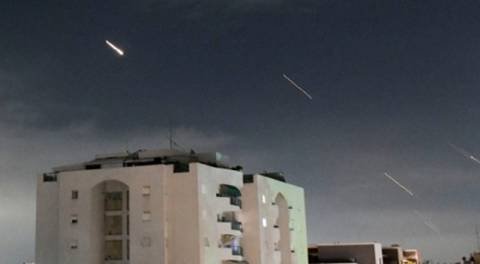
The Israeli Iron Dome air defense system launches to intercept missiles fired from Iran, in central Israel, on Sunday, April 14.(AP/Tomer Neuberg) |
|
Israel fended off a furious attack on Saturday with the help of powerful allies in the region and around the world. Multiple countries came together to help fend off over 300 drones and missiles launched at Israel from Iran, with the Israeli Defense Forces claiming that roughly 99% of the attack had been thwarted by their forces and allies.
"At my direction, to support the defense of Israel, the U.S. military moved aircraft and ballistic missile defense destroyers to the region over the course of the past week. Thanks to these deployments and the extraordinary skill of our servicemembers, we helped Israel take down nearly all of the incoming drones and missiles," President Biden said in a statement condemning the Iranian attack.
But the U.S. was not the only country to step up in the defense of Israel, with France, Jordan and the United Kingdom also playing roles in intercepting the attack. |

|
2. Washington Post: The Latest | Iran launches its first direct military attack against Israel https://www.washingtonpost.com/national/ 2024/04/13
The Latest | Iran launches its first direct military attack against Israel By Associated Press April 13, 2024 at 11:39 p.m. EDT
The attack late Saturday marked the first time Iran had ever launched a direct military assault on Israel, despite decades of enmity dating...
Iran launched its first direct military attack against Israel on Saturday. The Israeli military says Iran fired more than 100 bomb-carrying drones toward Israel. Hours later, Iran announced it had also launch much more destructive ballistic missiles and cruise missiles.
Iran had been threatening to attack Israel after an airstrike earlier this week widely blamed on Israel destroyed Iran’s consulate in Syria, killing 12 people, including two elite Iranian generals.
The Israeli Defense Forces said in a statement early Sunday the “vast majority” of missiles launched from Iran were intercepted outside of Israel’s borders. Israel has made missile defense a priority, with a variety of air-defense systems available to shoot down incoming missile and drone fire.
Israel and Iran have been on a collision course throughout Israel’s six-month war against Hamas militants in the Gaza Strip. The war erupted after Hamas and Islamic Jihad, two militant groups backed by Iran, carried out a devastating cross-border attack on Oct. 7 that killed 1,200 people in Israel and kidnapped 250 others. An Israeli offensive in Gaza has caused widespread devastation and killed over 33,000 people, according to local health officials.
BIDEN SAYS U.S. HELPED ISRAEL DOWN 'NEARLY ALL' IRANIAN DRONES AND MISSILES WASHINGTON — President Joe Biden says U.S. forces helped Israel down “nearly all” of the drones and missiles launched by Iran and pledged to convene allies to develop a unified response.
Biden and Israeli Prime Minister Benjamin Netanyahu spoke early Sunday, Israeli time, their governments said. Biden said in a statement that he reaffirmed “America’s ironclad commitment” to Israel’s security — a departure from his harsh criticism over Israel’s handling of the war in Gaza.
“At my direction, to support the defense of Israel, the U.S. military moved aircraft and ballistic missile defense destroyers to the region over the course of the past week,” Biden said in the statement. “Thanks to these deployments and the extraordinary skill of our servicemembers, we helped Israel take down nearly all of the incoming drones and missiles.”
The Iranian attack, less than two weeks after a suspected Israeli strike in Syria that killed two Iranian generals in an Iranian consular building, marked the first time it has launched a direct military assault on Israel
ISRAEL SAYS MOST MISSILES LAUNCHED FROM IRAN WERE INTERCEPTED
JERUSALEM — Israel’s military says the “vast majority” of missiles launched from Iran were intercepted outside of Israel’s borders.
The Israeli Defense Forces said in a statement early Sunday that dozens of surface-to-surface missile launches from Iran were identified approaching Israeli territory and that “the IDF Aerial Defense Array successfully intercepted the majority of the launches using the ‘Arrow’ Aerial Defense System, together with Israel’s strategic allies, before the launches crossed into Israeli territory.”
“A small number of hits were identified, including at an IDF base in southern Israel, where minor damage was caused to infrastructure,” the statement added.
It said “many dozens of hostile aircraft, as well as dozens of cruise missiles, from Iran were identified approaching Israeli territory and intercepted.”
Dozens of Israeli Air Force fighter jets are currently operating to intercept aerial threats approaching Israeli territory, it added.
UN CHIEF CALLS FOR IMMEDIATE CESSATION OF HOSTILITIES
U.N. Secretary-General António Guterres is calling for an immediate halt to hostilities in the Middle East. “I strongly condemn the serious escalation represented by the large-scale attack launched on Israel by the Islamic Republic of Iran this evening,” Guterres wrote in a statement Saturday night.
“I am deeply alarmed about the very real danger of a devastating region-wide escalation. I urge all parties to exercise maximum restraint to avoid any action that could lead to major military confrontations on multiple fronts in the Middle East,” Guterres wrote. “I have repeatedly stressed that neither the region nor the world can afford another war.”
GERMANY, FRANCE, CANADA CONDEMN IRANIAN ATTACKS AGAINST ISRAEL The French government forcefully condemned the Iranian air attack on Israel. French foreign minister Stéphane Séjourné said in a statement Saturday that in “taking such an unprecedented action, Iran has crossed a new threshold with regard to its destabilizing activities and is risking a potential military escalation.”
German Foreign Minister Annalena Baerbock wrote early Sunday on X that Germany condemns “in the strongest possible terms the ongoing attack, which could plunge an entire region into chaos.
“Iran and its proxies must stop it immediately,” Baerbock wrote. “We offer Israel our full solidarity at this time.”
Likewise, Canadian Prime Minister Justin Trudeau said his nation “unequivocally condemns Iran’s airborne attacks against Israel.”
“We stand with Israel. After supporting Hamas’ brutal October 7 attack, the Iranian regime’s latest actions will further destabilize the region and make lasting peace more difficult,” Trudeau said in a statement.
“We support Israel’s right to defend itself and its people from these attacks.”
BRITAIN AND ARGENTINA RESPOND TO IRANIAN ATTACK ON ISRAEL U.K. Defense Secretary Grant Shapps said additional Royal Air Force jets and air refueling tankers have been sent to the Middle East to bolster Britain’s existing operation against the Islamic State Group in Iraq and Syria. He said the jets “will intercept airborne attacks within range of our existing missions,” but did not confirm whether RAF jets had already shot down any Iranian drones.
Meanwhile, the spokesperson of Argentine President Javier Milei says the leader will cancel a trip to Denmark and return to Buenos Aires due to Iran’s attack on Israel.
A statement from presidential spokesperson Manuel Adorni said Milei was flying home to form a “crisis committee in light of the latest events in Israel, to take charge of the situation and coordinate actions with the presidents of the Western world.”
U.S. officials say American military forces have downed some Iran-launched attack drones flying toward Israel. That is according to a U.S. defense official and two U.S. officials who spoke on the condition of anonymity to discuss the matter. The defense official said the effort to intercept the attack was continuing.
Since Iran announced its attack Saturday against Israel, air raid sirens have gone off in Jerusalem, in northern and southern Israel, in the Negev region, in the Shomron area and in the Dead Sea region.
— Associated Press writers Zeke Miller and Lolita C. Baldor in Washington and Mike Balsamo in New York contributed.
ISRAEL ORDERS RESIDENTS IN SOME AREAS TO MOVE CLOSE TO PROTECTED SPACES The Israeli army has ordered residents of the Golan Heights in the north and Nevatim, Dimona and Eilat in the south to stay close to a protected space — such as a shelter, stairwell or inner room — until further notice. Residents must be able to reach the protected spaces as soon as air raid sirens are activated, the statement said. “We ask the public to follow the instructions of the Home Front Command regarding the situation and wait for additional instructions,” the statement said.
IRAN SAYS IT HAS FIRED BALLISTIC MISSILES AT ISRAEL Iran’s state-run IRNA news agency says Tehran has fired ballistic missiles at targets inside of Israel. The announcement came shortly after Iran said it fired dozens of bomb-carrying drones. Slow-moving Shahed-136 drones have been seen in the skies over Iran. However, those are more easily shot down. Israel has missile defense systems capable of targeting ballistic missiles. However, in a massive attack involving multiple drones and missiles like the campaign launched late Saturday by Iran, the likelihood of a strike making it through is higher.
ISRAELI ARMY SAYS IT IS DETERMINED TO DEFEND THE COUNTRY The Israel Defense Forces says that it is prepared to defend itself against a massive drone attack launched by Iran. Rear Admiral Daniel Hagari, the army’s spokesperson, said the country is closely monitoring the drones that are headed to Israel.
“Our defensive and offensive capabilities are at the highest level of readiness,” he said. “Together with our partners, the Israel Defense Forces is operating at full-force to defend the State of Israel and the people of Israel.”
US PLEDGES UNWAVERING SUPPORT FOR ISRAEL AMID IRANIAN ATTACK National Security Council spokesperson Adrienne Watson said Saturday that the United States “will stand with the people of Israel and support their defense against these threats from Iran.”
The Pentagon reported that Defense Secretary Lloyd Austin had spoken with his Israeli counterpart “and made clear that Israel could count on full U.S. support to defend Israel against any attacks by Iran and its regional proxies.” National security adviser Jake Sullivan also spoke with his counterpart to reinforce Washington’s “ironclad commitment” to Israel’s security.
ISRAEL CLOSES ITS AIRSPACE AS IT ANTICIPATES DRONE ATTACK Israel says it has closed its airspace after Iran launched dozens of drones against it late Saturday. Israeli aviation authorities said they were closing the country’s airspace to all flights as of 12:30 a.m. local time (5:30 p.m. EDT).
ATTACK REPRESENTS FIRST DIRECT MILITARY ASSAULT ON ISRAEL BY IRAN The attack late Saturday marked the first time Iran had ever launched a direct military assault on Israel, despite decades of enmity dating back to the country’s 1979 Islamic Revolution.
Iran has a vast arsenal of drones and missiles. Tehran’s choice of the Shahed-136 drones both give Israel and its allies hours to shoot down the bomb-carrying drones. For the time being, it does not appear Iran has used any of its ballistic missiles in the attack, which would pose a greater risk to Israel. |
|
3. Washington Post: Iran crosses old red lines and sets ‘new equation’ with attack on Israel https://www.washingtonpost.com› World Middle East
Iran crosses old red lines and sets ‘new equation’ with attack on Israel
By Susannah George April 14, 2024 at 2:32 p.m. EDT
With its first-ever direct military attack on Israel, Iran crossed old red lines and created a precedent in its decades-long shadow war with the Jewish state.
Iran “decided to create a new equation,” said the head of Iran’s Islamic Revolutionary Guard Corps, Maj. Gen. Hossein Salami, in an interview with state-run television Sunday. “From now on, if Israel attacks Iranian interests, figures and citizens anywhere, we will retaliate from Iran.”
As a show of force, the attack was unprecedented in scope, involving more than 300 drones and missiles combined, but analysts said it was also carefully choreographed — giving Israel and its allies time to prepare, and providing the Israeli government a possible off-ramp amid fears of a widening war.
The assault was designed with the knowledge that Israel’s “multi-layer systems would prevent most of the weapons from reaching a target,” said Sima Shine, head of the Iran program at the Institute for National Security Studies in Tel Aviv. “That outcome made space for Netanyahu and senior leaders to strike a more measured tone than they could if one of the missiles had taken out an apartment building or barracks.”
Since the war in Gaza began in October, Iranian proxies from Lebanon to Yemen have launched attacks against Israeli and U.S. military installations, but Tehran has consistently signaled it has no desire for a head-on conflict. However, after an Israeli airstrike on a diplomatic compound in Damascus killed two Iranian generals this month, the country felt compelled to respond from its own territory, according to analysts and Iranian officials.
“We showed restraint for six months, considering the conditions of the region and considering that we are not seeking to expand the scope of tension,” Iranian Foreign Minister Hossein Amir-Abdollahian told reporters Sunday. “It seems that the Israeli regime received the wrong signal from Iran’s restraint.”
After a January attack by an Iranian-aligned militant group in Iraq killed three U.S. service members in Jordan, Iran dispatched emissaries to Iraq and Lebanon to cool tensions and deliver guidance that attacks on U.S. bases and interests in the region should stop. The attacks subsided almost immediately and the informal truce has held. But over the past few months, Israel has stepped up its strikes on Iranian interests across the region. The attack in Damascus was especially provocative because of its target — a diplomatic compound, traditionally exempted from hostilities — and because it killed two senior generals in Iran’s elite Revolutionary Guard.
There was a sense that “Iran’s passivity had encouraged Israel to push the envelope too far,” said Ali Vaez, the Iran project director for the International Crisis Group. Vaez said Iran’s rulers were under increasing pressure to respond to Israel directly.
“You would even see commentators on state TV criticizing Iran’s strategy of restraint,” Vaez said. These pressures are new, Vaez said, and speak to the growing strength of ultra-hard-line elements within Iran.
Iranians gather around a truck carrying the coffins of members of the Islamic Revolutionary Guard Corps who were killed in an airstrike in Syria, during their funeral in Tehran on April 5. (Abedin Taherkenareh/EPA-EFE/Shutterstock)
In the two weeks since the Damascus strike, Iran’s leaders publicly and repeatedly telegraphed that its forces would respond. The country’s supreme leader pledged that Israel would “regret” its actions.
U.S. and Israeli officials began to warn over the past several days that an attack was imminent. Iran announced on social media that the barrage had been unleashed while the drones and missiles were airborne.
Gen. Mohammad Bagheri, Iran’s joint chief of staff, said the operation was “completely successful” in an interview Sunday with state-run media. Bagheri said the strikes destroyed an “intelligence center and air base”; Israel said 99 percent of drones and missiles had been intercepted, many outside Israeli territory, and there had been only minor damage to a base in the south.
Analysts said the attack was probably designed to look spectacular — a viral video showed projectiles being intercepted by Israel’s air defense system over the al-Aqsa Mosque complex in Jerusalem — while keeping death and destruction to a minimum.
Iranian weapons likely intercepted over al-Aqsa Mosque
Iranian weapons were likely intercepted over al-Aqsa Mosque in Jerusalem on April 14. (Video: Twitter) “Iran didn’t inflict maximum damage,” said Sanam Vakil, director of the Middle East and North Africa program at London’s Chatham House think tank. Yet “this was important for them symbolically,” she added, as a signal to domestic hawks and its regional proxies.
Iran took time to plan and orchestrate the response, Vakil said, an effort that Tehran hoped would demonstrate a wide range of capabilities across the region and ensure calibration was demonstrated across its disparate front lines.
In the hours after the attack, leaders in Tehran were quick to emphasize that the response was measured and contained. “Thank God, we see this mission as a successful one that brought the necessary results, so we see no need to pursue it any further,” said Bagheri, Iran’s joint chief of staff.
But Iran must now wait for Israel’s next move. While U.S. officials are urging their Israeli counterparts to refrain from a major escalation, analysts said Prime Minister Benjamin Netanyahu’s far-right government was unlikely to let the Iranian assault pass without a response. War cabinet member Benny Gantz said Sunday that Israel would “exact a price” at a time and place of its choosing.
Iran is “clearly prepared for a counter response and it’s willing to up the ante,” Vakil said. “In Tehran, I think, the thinking was that if it didn’t draw the red line, this would be a slippery slope to war.”
“The punishment of the aggressor, which was the sincere promise of the powerful and wise leader of the Islamic Revolution, has come true,” Iranian President Ebrahim Raisi said in a statement Sunday, describing the hundreds of drones and missiles launched at Israel as a “defensive measure” that sent a “combined operational message.”
Videos broadcast on state television showed crowds in Tehran celebrating the strikes and Iranian lawmakers cheering in the halls of parliament.
“Hail to the fighters of Islam!” the lawmakers chanted.
Leaders in Tehran have sold the country’s foreign policy, including its support for armed groups in Iraq, Syria, Lebanon and Yemen, as an attempt to insulate the country from instability and violence.
But some Iranians fear the situation could spiral out of control, with dire consequences for a country already isolated internationally and struggling through an economic crisis. Iran’s currency has lost a third of its value over the past two years and inflation is soaring.
Sohrab, a 50-year-old information technology expert, said he fears Iran’s leaders have backed Israel into a corner, leaving Netanyahu no choice but to respond. Like others interviewed inside Iran, he spoke on the condition that he be identified only by his first name, fearing reprisals from the state.
“The Islamic Republic alone is responsible for this tension,” he said. “I consider the whole foreign and regional policy of the Islamic Republic to be wrong.”
In the hours after Saturday’s attack, Sohrab said his mother called him in a panic, asking if she should stock up on food and water. Social media feeds in Iran were filled with rumored missile sightings.
Meisam, a 37-year-old sociology graduate who now works as the manager of a cafe in Iran’s north, said he fears escalation is inevitable. Iran’s attacks will “be interpreted as the declaration of war and will involve stronger and heavier measures on the part of Israel,” he said.
“The escalation of tension and stirring up insecurity in the region is not in anyone’s favor.” |
|
4. The Guardian: Why Israel’s attack on Iranian consulate in Syria was a game changer https://www.theguardian.com/world/2024/apr/14/why-israel-attack-on-iranian-consulate-in-syria-was-a-gamechanger
Why Israel’s attack on Iranian consulate in Syria was a game changer Peter Beaumont and Emma Graham-Harrison
A war long fought through proxies, assassinations and strikes outside Israel has spilled into the open Sun 14 Apr 2024 10.07 EDT
The large-scale attack by Iran on Israel may have passed with relatively little damage, but it marks a significant transformation in the conflict between the two enemies.
A war that has long been fought through proxies, assassinations and strikes away from Israeli soil – often in third countries – has spilled into the open.
While senior Israeli officials have framed this weekend’s Iranian attack as “revealing the true face” of Tehran, the reality is that the proximate cause was Israel’s misjudgment in its strike on an Iranian diplomatic compound in Syria that killed two senior Iranian generals, among others.
After years in which both sides operated within the framework of a largely undeclared set of “rules,” Israel – as analysts have pointed out – bulldozed through every red line to attack a location that Tehran maintains was tantamount to attacking Iranian soil. …… |
|
5. Sky News: Iran attack was 'declaration of war', Israeli president says - but insists 'we are seeking peace
Iran attack was 'declaration of war', Israeli president says - but insists 'we are seeking peace'
"We were attacked last night from four corners of the Middle East with proxies shooting at us, firing ballistic missiles, drones and cruise missiles," Isaac Herzog tells Sky News.
By Andy Hayes, news reporter Monday 15 April 2024 00:06, UK |
|
Iran's attack on Israel was a "declaration of war", Israel's president has told Sky News. |

|
6. Northeastern Global News: Iran’s strike on Israel can be seen as ‘declaration of war,’ Northeastern expert says
Iran’s strike on Israel can be seen as ‘declaration of war,’ Northeastern expert says
Max Abrahms, associate professor of political science at Northeastern, says the attack could have “international implications for the U.S.” as well as regional impact in countries like Jordan, Saudi Arabia and Yemen.
By Cesareo Contreras Cesareo Contreras is a Northeastern Global News reporter.
April 13, 2024
|
|
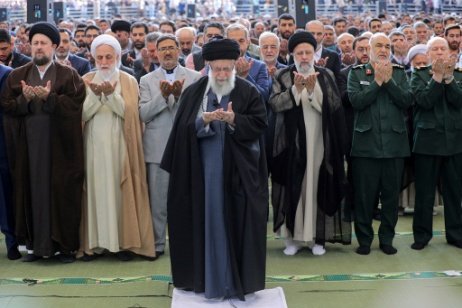
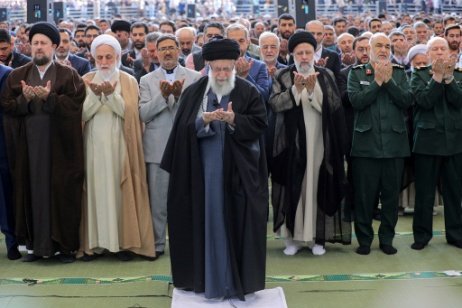
Supreme Leader Ayatollah Ali Khamenei leads Eid al-Fitr prayer, marking the end of the Muslims holy fasting month of Ramadan, in Tehran, Iran (Office of the Iranian Supreme Leader via AP) |
|
This report is part of ongoing coverage of the Israel-Hamas war. Visit our dedicated page for more on this topic.
Iran launched a strike on Israel Saturday, deploying more than 300 drones and missiles at the country as part of a large-scale aerial attack.
Israel says 99% of the weapons were intercepted, but Max Abrahms, associate professor of political science at Northeastern University, says Iran’s actions can be seen as “declaration of war” and will have broader implications on the broader conflicts in the Middle East.
The attack, which comes six months after Hamas attacked Israel, is an apparent response to an attack by Israel on an Iranian complex in Damascus, Syria, earlier this month.
The United States says it shot down an undisclosed number of the drones in the attack.
“Iran has essentially declared war against Israel, and Israel is going to respond in a substantial way,” Abrahms says. “It’s possible Israeli Prime Minister Benjamin Netanyahu will respond by targeting Iran’s nuclear facilities.” “Israel and Iran have been waging a low-grade war against each other in the shadows,” Abrahms says. “Iran has historically used its proxy groups to attack Israel from Yemen, Lebanon and even Palestinian territories with groups like Hamas, which are supported by Iran.”
Saturday’s attack came weeks after an Israeli airstrike at the Iranian Embassy complex in Damascus on April 1, killing three top Iranian commanders.
Abrahms says Iran’s response to that attack has caused the situation to be much more serious
“Israel attacked some terrorists outside of Iran, and Iran has responded apparently by firing hundreds of drones and missiles into Israel, ” he says.
The Biden administration had vowed to support Israel against the attack and in the past few days sent increased military aid in anticipation of Iran’s attack. In a statement to the New York Times on Saturday night, a U.S. Department of Defense official doubled down on the United States’ support of Israel.
“In accordance with our ironclad commitment to Israel’s security, U.S. forces in the region continue to shoot down Iranian-launched drones targeting Israel,” the statement says. “Our forces remain postured to provide additional defensive support and to protect U.S. forces operating in the region.” Abrahms adds the attack could have “international implications for the U.S.” as well as regional impact in countries like Jordan, Saudi Arabia and Yemen.
“There are simultaneous attacks by Iran’s proxies from Yemen, from Lebanon,” he says. “So yeah, this is a very serious situation. We’re in uncharted waters here.” |

|
7. Fox News: Iranian president makes no mention of Israeli strike despite threatening complete destruction
Friday, April 19, 2024
Iranian president makes no mention of Israeli strike despite threatening complete destruction
Raisi instead focused on Iran's own missile launch against Israel that was conducted on Saturday By Timothy H.J. Nerozzi Fox News Published April 19, 2024 2:01pm EDT
Iranian leadership is downplaying Israeli strikes against their country, despite previously vowing total war in the event of the "tiniest invasion."
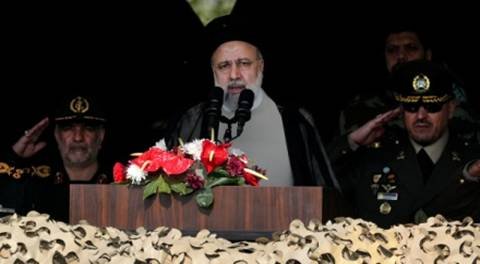
During a Friday speech, President Ebrahim Raisi did not mention the Israeli missile strike launched against the Isfahan region of Iran earlier the same day. Instead, Raisi focused on justifying Iran's own offensive attacks. ISRAEL HITS IRAN WITH 'LIMITED' STRIKES DESPITE WHITE HOUSE'S REPORTED OPPOSITION |
|
|
|
Iranian President Ebrahim Raisi speaks during an Army Day parade at a military base in northern Tehran, Iran. Raisi warned that the "tiniest invasion" by Israel would bring a "massive and harsh" response, as the region braces for potential Israeli retaliation after Iran's attack over the weekend. (AP Photo/Vahid Salemi) |
|
"Operation True Promise led to authority, unity and cohesion in the country," Raisi said in his speech, according to translations from Iran International English. "Today, all political groups and factions believe that this response was necessary and a big honor for the country."
Operation True Promise is the code name for the Iranian drone missile and drone launch against Israel that took place last week.
Iran launched hundreds of missiles and drones at Israel on Saturday in response to an apparent strike on Iran’s embassy compound in Syria on April 1 that killed 12 people, including two Iranian generals. It was the first-ever direct Iranian military attack on Israel.
|
|
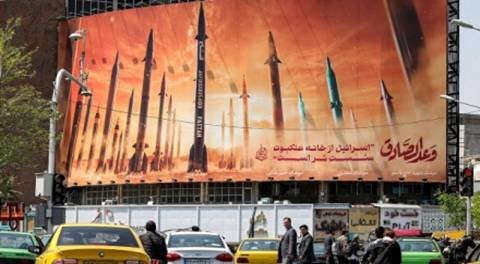
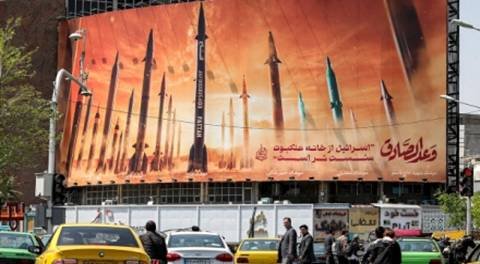
Motorists drive past a billboard depicting named Iranian ballistic missiles in service, with text in Arabic reading "the honest [person's] promise" and in Persian "Israel is weaker than a spider's web," in Valiasr Square in central Tehran, Iran. (ATTA KENARE/AFP via Getty Images) |
|
Israel, with help from the U.S., the U.K., neighboring Jordan and other nations, successfully intercepted nearly every missile and drone that Iran launched. Israel boasted of a 99% success rate, through the use of its Iron Dome and David’s Sling systems.
Following the Iranian launch, Raisi said the attack was a limited one — and that if Iran was provoked to carry out a bigger attack, "nothing would remain from the Zionist regime," the official IRNA news agency reported.
The Iranian supreme leader's decision not to address Israel's retaliatory strike shows a drastic gap between this previous rhetoric and the country's disposition moving forward.
Israel and Iran have waged a shadow war for decades, with the war coming to a head over the past few months as Iran has supported Hamas, which carried out the deadliest terror attack in Israel’s history on Oct. 7. |
|
8. New York Post: Israel hits back at Iran in retaliatory strike, targeting nuclear research facility and major air base: reports
Israel hits back at Iran in retaliatory strike, targeting nuclear research facility and major air base: reports By Victor Nava Published April 18, 2024 Updated April 19, 2024, 6:49 a.m. ET
Israel launched its expected retaliatory strike against Iran on Friday morning, according to multiple reports.
Israeli missiles hit at least one site in Iran, ABC News reported, citing US officials, and Iranian state media alerted citizens to explosions heard in the central part of the Islamic republic.
The attack comes after Iran rained more than 300 drones and missiles on the Jewish nation last Saturday — though nearly all were intercepted
The strikes come less than a week after Iran sent a series of missiles and drones at Israel.aaatankwaadi/X
Israel’s early morning retaliatory strike, however, appeared to be “limited,” a military source told Fox News. Israeli officials notified the US on Thursday that it had planned to strike Iran within 24 to 48 hours, according to Bloomberg News.
The Biden administration “didn’t endorse” Israel’s response, a US official told CNN.
|
|
Prime Minister Benjamin Netanyahu stated that Israel would “defend itself” and dismissed calls for restraint. @IsraelPM / X |
|
President Biden said “we defeated” Iran’s attack after Saturday’s assault and called for a Gaza cease-fire.REUTERS The city of Isfahan — home of Iran’s Natanz nuclear research facility and a major air base – appears to have been Israel’s primary target.
A scroll alerting viewers to a “loud noise” near Isfahan was displayed on Iranian state television, but provided no other information, according to the Associated Press.
State television claimed that all nuclear sites in the region were “fully safe.”
Hossein Dalirian, a spokesman for Iran’s civilian space program, claimed that the explosions were the results of three quadcopter drones that had been shot down, dismissing the threat Israel’s apparent retaliation posed to Iran.
Iran’s air defense systems were activated in several provinces after the explosions first rang out, state news outlet IRNA reported, according to CNN.
All flights bound for the cities of Tehran, Isfahan and Shiraz have been diverted, an Iranian official announced on state-run television, per the Times of Israel.
At least eight flights already in the air over Iran were diverted as the strike commenced, according to CNN.
“We do not have anything to offer at this time,” a Pentagon spokesperson told The Post when asked about the reported airstrikes.
The White House did not respond to The Post’s request for comment.
But some US lawmakers had more to say.
“Hearing [Supreme Leader of Iran Ali Khamenei] is having a blast today on his birthday,” Sen. Marco Rubio (R-Fla.) wrote on X, shortly after reports of the Israeli strike began to emerge.
Khamenei, 84, was indeed born on April 19.
President Joe Biden warned Israeli Prime Minister Benjamin Netanyahu after Saturday’s Iranian strike that the US would not take part in a counter-offensive. |


|
9. NBC News: Israel carries out limited strikes on Iran, with the extent of damage unclear
Israel carries out limited strikes on Iran, with the extent of damage unclear
Whether this turns into a dangerous escalatory spiral “will depend on how much damage was done inside of Iran,” former CIA Director John Brennan said.
April 19, 2024, 11:37 AM EDT By Courtney Kube, Mosheh Gains, Dan De Luce, Andrea Mitchell and Daniel Arkin
Israeli forces appear to have carried out a counterstrike on Iran five days after Tehran targeted Israel with a barrage of drones and missiles in an unprecedented attack in retaliation for Israel's bombing of an Iranian diplomatic compound in Syria.
The extent of the damage from the strike, which neither the Israeli nor Iranian governments commented on but was confirmed by two people familiar with the situation, remained unclear.
While largely appearing to downplay the strikes, reports from Iranian state media said that air defense systems had been engaged in several provinces early Friday morning and that there were limited explosions outside Isfahan, a historic city in central Iran that is home to a nuclear installation.
Later, Iranian state media reported that the sound of several explosions in Isfahan had been caused by the destruction of three small drones.
An Iranian anchor described Isfahan as being “in complete peace — people are living their normal lives.”
The International Atomic Energy Agency said there was no damage to Iran’s nuclear facilities.
Earlier in the week, Iranian officials said that after their strikes on Israel they did not want to continue hostilities but would counterstrike "immediately" should Israel attack in response. So far, that has not happened.
Israeli officials notified U.S. counterparts on Thursday that a military response was coming, according to a source.
U.S. not involved in any offensive operations, Blinken says of Israel's strike on Iran 00:51 video (transcript follows)
On Friday, Secretary of State Antony Blinken said he would not “speak to these reported events” but added that U.S. forces had “not been involved in any offensive operations” when asked about the strike.
The U.S. was "intensely focused" on de-escalating the violence, Blinken added during a news conference in Capri, Italy, during a G7 meeting.
'Target-rich environment'
Whether this turns into a dangerous escalatory spiral “will depend on how much damage was done inside of Iran,” former CIA Director John Brennan told MSNBC.
Intelligence agencies will be trying to determine the scope of the Israeli strike’s damage, and whether there are casualties, or how many, could increase pressure on Iran to respond, he added. As of Friday afternoon, there did not appear to be major damage or any reported casualties.
Isfahan is a “target-rich environment,” with an air base, a missile production facility and other areas that could be of interest, Brennan said.
Israel is neither confirming nor denying it was responsible for Friday morning’s attack. When approached by NBC News, both the Israeli prime minister’s office and the Israel Defense Forces responded with “no comment,” and there were no scheduled plans for Prime Minister Benjamin Netanyahu to speak publicly.
The official silence from the Israeli government could indicate a strategy to not further provoke Iran, which could increase public pressure there to retaliate. By remaining silent, Israel is giving Iran space to minimize the incident and plausibly claim there’s no need for escalation.
The Israeli Embassy in Washington, D.C., and the CIA also declined to comment.
People demonstrate demanding a regional peace agreement outside of the U.S. Embassy Branch Office in Tel Aviv.Leo Correa / AP
The attack by Iran last weekend was the first time it had launched a direct military assault on Israel. It came less than two weeks after Israel bombed an Iranian diplomatic compound in Damascus, killing 12 people, including seven Iranian military commanders.
Israel, the U.S. and their allies fended off the Iranian drone and missile attacks, which caused relatively little damage. |